

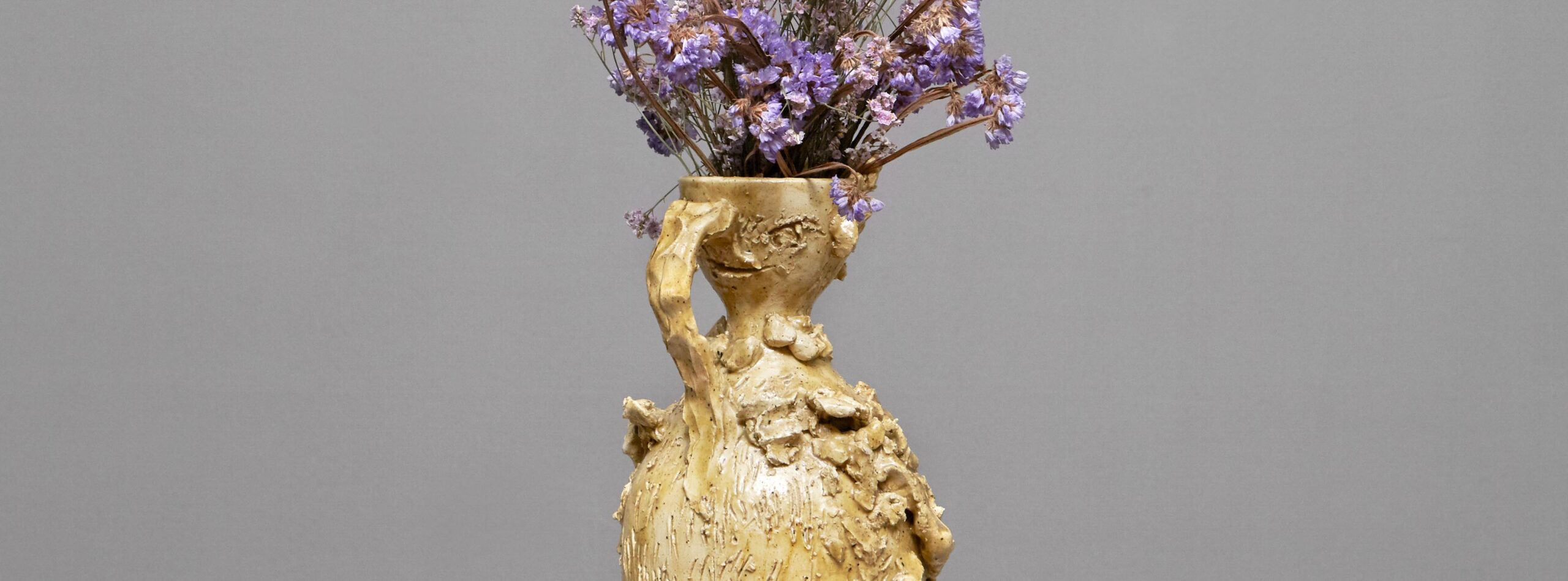
Chiara Camoni, La Cenere di Montelupo #9, 2017. Detail
Chiara Camoni, 'I fiori del male'
October 10, 2026-January 26, 2027 – Rome
with Fantine Andrès, Maria Loboda, Marianne Marić, Vibeke Mascini, Lionel Sabatté, Adrianna Wallis and Yuyan Wang.
For its second exhibition since the opening of its Roman space, La Società delle Api presents I fiori del male, a project dedicated to the work of Chiara Camoni and curated by Alice Motard. The exhibition takes as its starting point a collection assembled over the years by Silvia Fiorucci, who has followed the artist’s work since her beginnings.
The flower is ubiquitous in Camoni’s work, where it appears both as a motif and as a material. But what happens when we stop seeing it as the consensual symbol of life, delicacy and beauty? I fiori del male reveals another side – chthonic, encrypted, destructive, artificial, spiritual.
The exhibition does not seek to deny the fundamentally positive dimension of Camoni’s work, which is grounded in respect for nature, handmade processes and collective making, but rather to complicate it. It brings to light its darker side, the shadowy zones and spaces beyond the frame. For “beauty is always bizarre”, in the words of Charles Baudelaire, whose 1857 collection of poems lends its title to the exhibition; it is traversed by the sordid, by desire and violence, and by all that is usually repressed, concealed or kept at bay.
The exhibition opens with two pencil drawings of lilies, flowers known for their toxic properties, from a larger series made by the artist during the Covid-19 pandemic. Every day during the first lockdown, Camoni would send an image of one of her sketches to a circle of friends, including Silvia Fiorucci. From one sheet to the next, the flower metamorphoses. Lascivious bodies, sexual organs, animals, faces and other mimetic signs: the vegetal forms become almost hallucinatory, like the figures we see in clouds – a recurring motif in the work of the French poet.
These carnal forms echo the “sickly” flowers of his book, which caused a scandal in its time. Each room explores a different facet of this subversive power: the flower as poison, as language, as jewel, as threat, or as apparition. The poet’s verses punctuate the exhibition, inflecting the way it is read.
Reflecting the artist’s habit of welcoming other voices into her practice, the exhibition brings together works by Fantine Andrès, Maria Loboda, Marianne Marić, Vibeke Mascini, Lionel Sabatté, Adrianna Wallis and Yuyan Wang. Acting as “counterpoints”, they extend and sharpen the reflections initiated by Camoni’s own pieces.
All these works, gathered within the setting of the palazzo at 40 Via Gregoriana, enter into dialogue with the Renaissance grotesques adorning its vaulted compartments, the coffered ceilings of its rooms, the marquetry of its parquet floors, and the marble found throughout the building. Between the vegetal, the animal and the architectural, I fiori del male thus proposes a non-Manichean, troubled and ambiguous reading of Chiara Camoni’s work.
-Alice Motard
PUBLIC PROGRAM:
On the occasion of I fiori del male, the Public Program will unfold across three events that, through different approaches, expand the themes of the exhibition, bringing together artistic practices, research, materiality, and forms of collective imagination.
20 November — Blooming Voices: Can You Speak Flower?
A lecture by Alexandra Midal exploring the relationship between femininity, floral representation, and unconventional forms of communication. The lecture will draw on floriography, the symbolic system that transformed flowers, bouquets, and ornaments into a code through which to express feelings and meanings indirectly.
11 December — Materia Sogno
The seminar, initiated in Venice during the Biennale, takes the form of an open space for collective exchange, where stories, readings, actions, objects, and different practices contribute to an evolving reflection, conceived as a collage of contributions released at a slow pace.
26 January — Round and Round
A conversation between Chiara Camoni and Alice Motard, followed by a discussion with the public and the activation of CircoTornio. The meeting will retrace the genesis and development of I fiori del male and the collaboration between artist and curator, followed by the presentation of the catalogue published by NERO.
BIOGRAPHICAL NOTES:
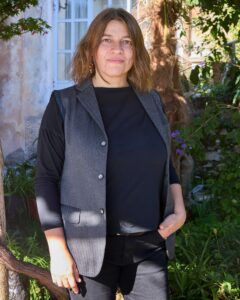
Chiara Camoni (Piacenza, 1974) lives and works in the Apuan Alps in Tuscany. She works across drawing, botanical printing, video and, above all, sculpture, with a particular focus on ceramics. Her work often emerges through collaborative processes and practices of shared authorship, which in recent years have taken shape through Il Centro di Sperimentazione. In 2026, Camoni represents Italy at the Italian Pavilion of the 61st International Art Exhibition – La Biennale di Venezia with the project Con te con tutto, curated by Cecilia Canziani. Her work has been presented at major Italian and international institutions, including Pirelli HangarBicocca, Milan; CAPC Musée d’art contemporain de Bordeaux; MIMA – Middlesbrough Institute of Modern Art; Museo Patio Herreriano, Valladolid; GAM, Turin; Palazzo Collicola, Spoleto, and many others.
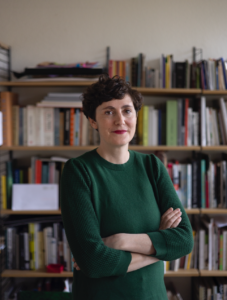
Alice Motard is a curator and art writer. Since 2025, she has been a member of the committee supporting publishing and research in art theory and criticism at the Centre national des arts plastiques (Cnap). Over the past twenty years, she has held curatorial and institutional positions in the UK and France, successively serving as Deputy Director and Exhibitions Organiser at Raven Row, London (2008–2013), Curator at Spike Island, Bristol (2014–2016), Chief Curator at CAPC Musée d’art contemporain de Bordeaux (2016–2021), and Director of CEAAC, a contemporary art centre in Strasbourg (2021–2026). She holds a Master’s degree in Curating Contemporary Art from the Royal College of Art, London, and a Master’s degree in Art History from Université Paris 1 Panthéon-Sorbonne and Freie Universität Berlin.
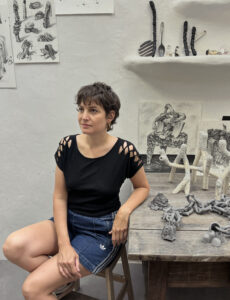
Fantine Andrès (b. 1983, lives and works in Strasbourg) graduated with a DNSEP from the École supérieure d’art et design de Saint-Étienne (ESADSE) in 2009. Her practice is rooted in graphite drawing, which she expands into installations incorporating ceramics, wood, and glass. Her work explores monstrosity through the lens of still life. Drawing on ambiguous, often unidentifiable forms, she disrupts familiar visual cues and examines the aesthetic norms that shape our perceptions of beauty. Balancing attraction and repulsion, her works question the collective gaze when confronted with forms that oscillate between fascination and rejection. They also evoke a contemporary vanitas, bringing natural cycles into tension with processes of human destruction and waste. Andrès has participated in residencies in Argentina, Poland, and Mexico, and recently completed a residency at Le Bel Ordinaire in Pau. Her work has been presented internationally in group exhibitions, including at Kunsthalle Basel and Piedras Galería in Buenos Aires, as well as in solo exhibitions in Strasbourg and at the Łaźnia Centre for Contemporary Art in Gdańsk.
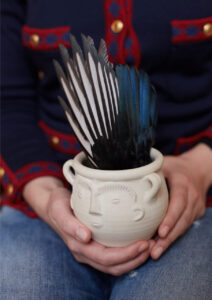
Maria Loboda (b. 1979, lives and works in Berlin, Nuremberg, and Krakow) creates installations and sculptures that investigate cultural codes through pictorial signs, materials, and objects. Her work examines the historical narratives attached to objects and juxtaposes them with contemporary interpretations, tracing how meanings shift through changing contexts. Drawing on poetry, history, semiotics, and material culture, Loboda explores the relationship between language and materiality, questioning what forms and symbols can express beyond their conventional readings. Through processes of deconstruction and reorganization, her practice has been described as a form of contemporary archaeology, often addressing structures of power with a subversive and critical perspective. Loboda studied at the Städelschule in Frankfurt with Mark Leckey from 2003 to 2008 and became Professor of Sculpture at the Academy of Fine Arts Nuremberg in 2025. Her work has been presented at documenta 13 (2012), the Taipei Biennial (2014), the 58th Venice Biennale (2019), and Art Basel Parcours (2022). Major solo exhibitions include Senckenberg Museum, Frankfurt (2023), Ujazdowski Castle Centre for Contemporary Art, Warsaw (2019), Schirn Kunsthalle, Frankfurt (2018–2019), Kunsthalle Basel (2017), and The Power Plant, Toronto (2016).
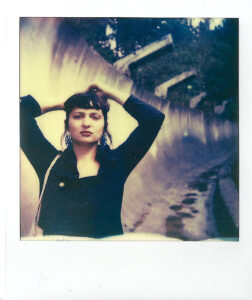
Marianne Marić (b. 1982, lives and works between Paris and Strasbourg) graduated from the École nationale supérieure d’art et de design in Nancy (2007) and the National College of Art and Design in Dublin (2009). She trained alongside documentary and fashion photographers and at the Paris-based laboratory Imaginoir. Working primarily with analogue photography, her practice draws on painting and is characterised by a strongly performative approach. Marić’s work has been shown in solo and group exhibitions in France and internationally, including recent presentations at Kunsthalle Mulhouse (2025), CEAAC, Strasbourg (2024–2025), Palais de Tokyo, Paris, and the Museum of Modern Art, Warsaw (both 2024), as well as at Photo London (2022) and Paris Photo (2021). In 2019, she was the guest of honour at the Festival Internacional de Fotografía de Valparaíso, Chile. She has undertaken residencies at the Cité internationale des arts, Paris (2026), Tirana – Vila 31 x Art Explora, Albania (2025), and in Sarajevo, in collaboration with Duplex100m2 gallery, on several occasions between 2012 and 2022. Her photographs have been published in Reporters sans frontières, artpress and The New York Times, among others.
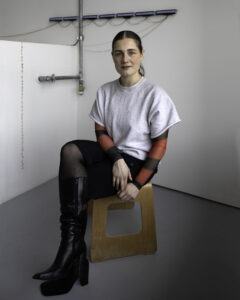
Vibeke Mascini (b. 1989, lives and works between The Hague and Mexico City) graduated from the Gerrit Rietveld Academie in Amsterdam (2013). Through sculpture, installation, video, and text, she explores how abstract phenomena can be scaled into the sensory realm, seeking forms of agency rooted in intimacy. Working in long-term collaboration with scientists, engineers, government employees, and musicians, she investigates electrical energy as a way of understanding interconnectedness and entanglement – between species, media, and nature, and between matter and energy. She was a resident at the Rijksakademie van beeldende kunsten, Amsterdam (2021–2023), and Delfina Foundation, London (2020). Recent solo exhibitions include Hammer Projects: Vibeke Mascini, Hammer Museum, Los Angeles, Gust, Z33, Hasselt, Netherlands, and Daisychain, Kasteel Wijlre Estate, Netherlands (all 2026); Le monde est un verbe, CAPC Musée d’art contemporain de Bordeaux, Digits, Kunstenlab, Deventer, Netherlands (both 2025); and Alchemy of Aches, Proyectos Ultravioleta, Guatemala City (2023). Group exhibitions include A World of Water, The Sainsbury Centre, Norwich, Gaia Should Be Safe, MACA, Beijing (both 2025); and Songs for Tomorrowland, Biennial of Land and Environmental Art, Safien Valley (2024).
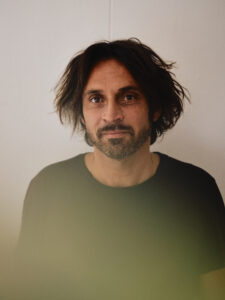
Lionel Sabatté (1975, lives and works in Paris and Pont-Audemer) graduated from the École nationale supérieure des beaux-arts de Paris (2003). Sabatté works across painting, drawing, sculpture and photography. He explores the forms and transformations of living matter, often drawing on the natural world and the fragility of life. His practice moves between sensitive figuration and forms approaching telluric abstraction, using unconventional materials such as dust, oxidation, natural pigments and dead skin. In 2025 Lionel Sabatté was shortlisted for the prestigious Marcel Duchamp Prize. He has received numerous awards, including the Luxembourg Art Prize (2020), the Prix des Amis de la Maison Rouge and the Drawing Now Prize (both 2017), and the Yishu 8 Prize in Beijing (2011). His work has been presented in numerous solo exhibitions in France and internationally, most recently at Maison des arts Georges & Claude Pompidou, Cajarc (2026), Château de Chambord (2023), and MAMC+ Saint-Étienne Métropole (2021). He is currently the subject of a solo exhibition at the Musée de la Chasse et de la Nature, Paris. Lionel Sabatté is represented by the gallery Ceysson & Bénétière.
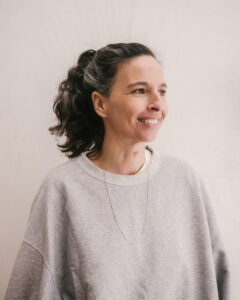
Adrianna Wallis (b. 1981, lives and works in the Vercors) graduated from the Barcelona School of Fine Arts. In 2020, she co-founded the Villa Glovettes residency program. Her archive-based practice encompasses performance, sculpture, sound installation, and photography. She collects and reactivates people’s stories, whether shared with her directly or embedded in objects, bringing them into dialogue with the intimate experiences of others. Through simple, poetic acts of manipulation and staging, she draws attention to the unnoticed, the ordinary, the forgotten, and the hidden, transforming them into spaces for memory and reflection. Recent solo exhibitions and performances include Il restera la gravité, Galerie Anne-Laure Buffard, Paris and Les liseurs, Musée Carnavalet, Paris (both 2026); 11 petites soucoupes, Musée d’art et d’histoire du Judaïsme, Paris (2024); and Les lettres ordinaires, Musée des Archives nationales, Paris (2020). She is currently participating in Vies minuscules, a group exhibition presented by the Centre Pompidou at the Panthéon in Paris. Her work is held in public collections in France, including the FRAC Nouvelle-Aquitaine MÉCA and FRAC Grand Large, and in Spain at La Panera.
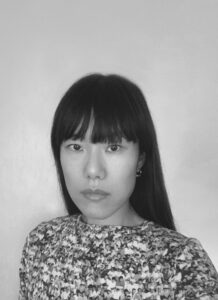
Yuyan Wang (b. 1989, lives and works in Paris) is a filmmaker and video artist whose works involve recycled materials from the industrial sphere of image production, tracing their mutation and proliferation within the digital frameworks and representations. Through the editing process, Wang deconstructs and recontextualizes the intricate hierarchies and inherent meanings in materials – whether found, processed, and produced – striping symbols of their conventional paths of perception and turning them into immersive sensory experiences. Wang completed her studies at the École des Beaux-Arts de Paris in 2016 and later at Le Fresnoy – Studio national des arts contemporains in 2022. Her work has been showcased at Tate Modern, Palais de Tokyo, UCCA Beijing, the 12th Berlin Biennale and various festivals, such as the Berlinale International Film Festival, the International Film Festival Rotterdam, MoMa Doc Fortnight, CPH:DOX, the European Media Art Festival, receiving numerous awards. Recent solo exhibitions include Glowing, flaring, lurid, loud (2026) at CRAC Alsace, Altkirch, Weather at 3 bis f – Centre d’arts contemporains, Aix-en-Provence, and #1616d at The Douglas Hyde Gallery, Dublin (both 2025).